

How does Calcium Nitrate improve the properties of plastics?
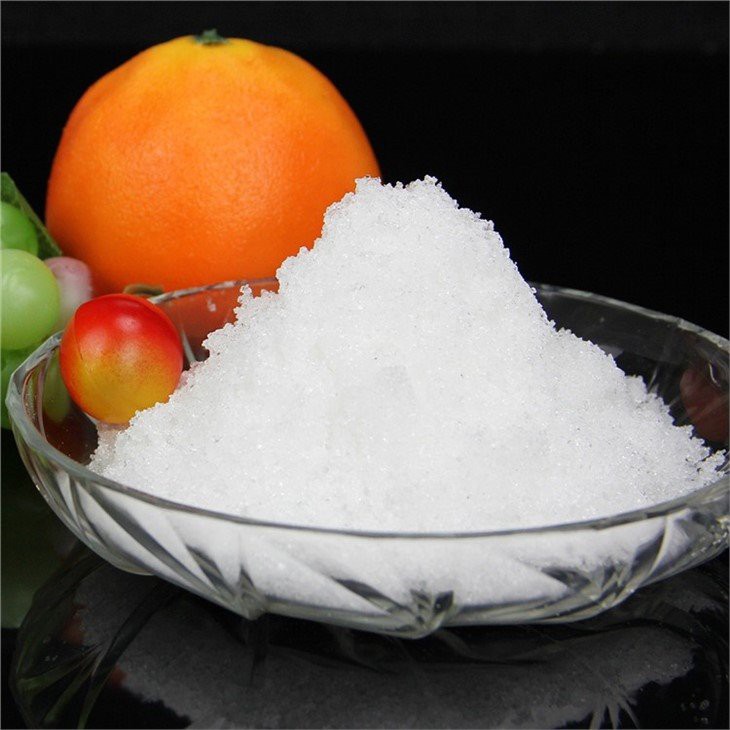
As a trusted supplier of Calcium Nitrate, I've witnessed firsthand the remarkable impact this compound can have on the plastics industry. Calcium Nitrate, available in forms like Calcium Nitrate Granular and Calcium Nitrate Crystal, offers a range of benefits that enhance the performance and quality of plastics. In this blog post, I'll delve into the science behind how Calcium Nitrate improves the properties of plastics and why it's a valuable addition to plastic manufacturing processes.
1. Enhancing Mechanical Properties
One of the primary ways Calcium Nitrate improves plastics is by enhancing their mechanical properties. When incorporated into plastic formulations, Calcium Nitrate can act as a filler and reinforcement agent. The calcium ions in Calcium Nitrate can interact with the polymer chains in plastics, creating cross - links or physical entanglements. This interaction helps to distribute stress more evenly throughout the plastic material, increasing its tensile strength, flexural strength, and impact resistance.
For example, in the production of polypropylene (PP) plastics, adding a small amount of Calcium Nitrate can significantly improve its toughness. The calcium ions form weak bonds with the PP chains, which prevent the chains from sliding past each other easily under stress. As a result, the plastic can withstand higher forces without breaking or deforming, making it suitable for applications where durability is crucial, such as automotive parts and industrial containers.
Moreover, Calcium Nitrate can also improve the dimensional stability of plastics. It reduces the shrinkage and warping that often occur during the cooling and solidification process of plastic molding. By acting as a nucleating agent, Calcium Nitrate promotes the formation of smaller and more uniform crystal structures in semi - crystalline plastics. These smaller crystals lead to a more consistent volume change during cooling, minimizing the risk of distortion and ensuring that the final plastic products have precise dimensions.
2. Improving Flame Retardancy
Flame retardancy is a critical property for many plastic applications, especially in the construction, electronics, and transportation industries. Calcium Nitrate can play a significant role in enhancing the fire - resistant properties of plastics. When exposed to high temperatures, Calcium Nitrate decomposes endothermically, absorbing heat from the surrounding environment. This heat absorption slows down the rate of combustion and reduces the heat release rate of the plastic.
In addition, the decomposition products of Calcium Nitrate can form a protective layer on the surface of the plastic. This layer acts as a barrier, preventing oxygen from reaching the combustible polymer chains and reducing the spread of flames. For instance, in the case of polyethylene (PE) plastics, incorporating Calcium Nitrate can transform them from highly flammable materials to ones with improved fire - resistance ratings. This makes PE plastics safer for use in electrical wiring insulation and building insulation materials.
Furthermore, Calcium Nitrate can work synergistically with other flame retardant additives. When combined with halogen - free flame retardants, such as aluminum hydroxide or magnesium hydroxide, Calcium Nitrate can enhance their effectiveness. It can improve the dispersion of these additives in the plastic matrix, ensuring that they are evenly distributed and can provide better protection against fire.
3. Moisture Resistance and Anti - Blocking
Plastics are often susceptible to moisture absorption, which can lead to a variety of problems, including reduced mechanical properties, surface degradation, and mold growth. Calcium Nitrate can help improve the moisture resistance of plastics. It has hygroscopic properties, which means it can attract and hold water molecules. When added to plastics, Calcium Nitrate can act as a desiccant, preventing moisture from penetrating the plastic matrix.
In addition, Calcium Nitrate can also act as an anti - blocking agent. In plastic films and sheets, the surfaces can stick together during storage and handling, a phenomenon known as blocking. Calcium Nitrate particles can create a rough surface on the plastic, reducing the contact area between adjacent layers and preventing them from sticking. This is particularly important in the packaging industry, where plastic films need to be easily separated and unwound during the packaging process.
4. Catalytic Effects in Polymerization
In some cases, Calcium Nitrate can act as a catalyst in the polymerization process of plastics. It can speed up the reaction rate between monomers, leading to faster production times and higher yields. For example, in the synthesis of epoxy resins, Calcium Nitrate can promote the cross - linking reaction between the epoxy monomers and the curing agents. This results in a more efficient polymerization process and a final product with improved mechanical and chemical properties.
The catalytic effect of Calcium Nitrate is also beneficial in the production of biodegradable plastics. It can help to control the rate of degradation of these plastics, ensuring that they break down at an appropriate pace in the environment. By adjusting the amount of Calcium Nitrate added to the biodegradable polymer formulations, manufacturers can tailor the degradation rate to meet the specific requirements of different applications.

5. Compatibility with Different Polymers
One of the advantages of using Calcium Nitrate in plastics is its wide compatibility with different types of polymers. Whether it's thermoplastics like polyethylene, polyvinyl chloride (PVC), and polycarbonate, or thermosetting plastics like epoxy and phenolic resins, Calcium Nitrate can be incorporated into their formulations with relative ease.
This compatibility is due to the chemical nature of Calcium Nitrate. The calcium ions can interact with a variety of functional groups present in different polymers, such as hydroxyl, carboxyl, and ester groups. These interactions allow Calcium Nitrate to disperse evenly in the polymer matrix, maximizing its beneficial effects on the plastic properties.
For example, in PVC plastics, Calcium Nitrate can be used as a stabilizer. It can react with the hydrogen chloride gas that is released during the thermal degradation of PVC, preventing the further decomposition of the polymer and improving its heat stability. This makes PVC more suitable for long - term use in applications such as pipes, window frames, and flooring.
Conclusion
In conclusion, Calcium Nitrate offers a multitude of benefits for the plastics industry. From enhancing mechanical properties and flame retardancy to improving moisture resistance and acting as a catalyst in polymerization, it has the potential to transform the performance and quality of plastic products. As a supplier of high - quality Calcium Nitrate Granular and Calcium Nitrate Crystal, I am committed to providing reliable and effective solutions for plastic manufacturers.
If you are interested in exploring how Calcium Nitrate can improve the properties of your plastic products, I encourage you to reach out to me for more information and to discuss potential procurement opportunities. I look forward to working with you to enhance the performance of your plastic materials and meet your specific requirements.
References
- “Plastic Additives Handbook” by Hans Zweifel.
- “Flame Retardancy of Polymeric Materials” edited by Charles A. Wilkie and Ellen M. Stevens.
- Research papers on the use of Calcium Nitrate in polymer composites from academic journals such as “Polymer Engineering and Science” and “Journal of Applied Polymer Science”.