

Hey there! As a supplier of Calcium Nitrate Crystal, I've got a ton of insights into how the particle size of this cool compound can really shake up its properties and uses. Let's dive right in!
Understanding Calcium Nitrate Crystal
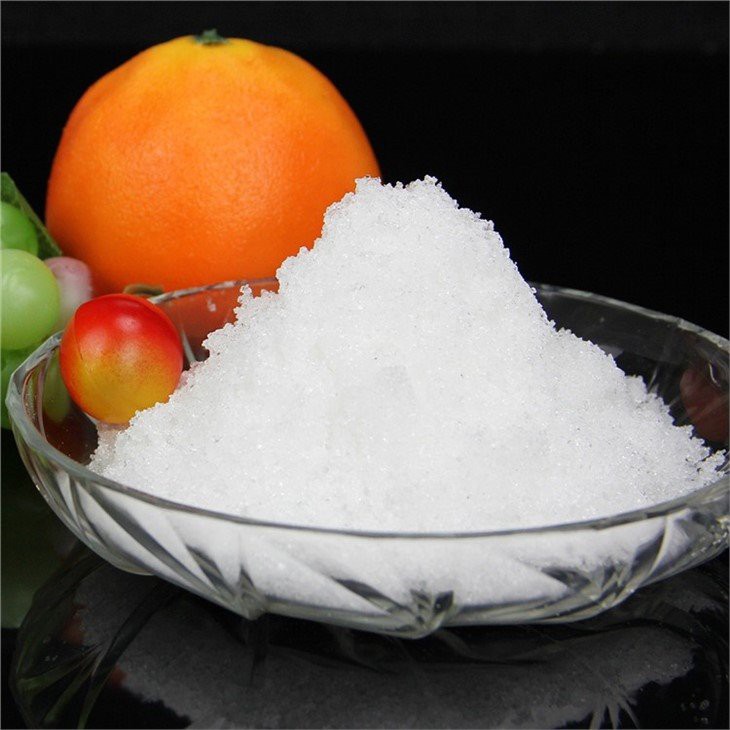
Before we get into the nitty - gritty of particle size, let's quickly refresh what calcium nitrate crystal is. Calcium nitrate, with the chemical formula Ca(NO₃)₂, is a white crystalline solid. It's highly soluble in water and is commonly used in a bunch of different industries. You can find it in fertilizers, explosives, and even in some food preservation processes.
How Particle Size Affects Properties
Solubility
One of the most significant ways particle size impacts calcium nitrate crystal is its solubility. Smaller particles have a greater surface area relative to their volume. Think of it like this: if you break a big chunk into tiny pieces, there's more exposed area for the water molecules to interact with. As a result, smaller - sized calcium nitrate crystals dissolve much faster in water compared to larger ones.
For instance, in a field where farmers need to quickly apply calcium and nitrogen to their crops, using calcium nitrate crystals with a smaller particle size can be a game - changer. The nutrients are released into the soil solution rapidly, making them readily available for plant uptake.
Reactivity
Reactivity is also closely tied to particle size. Small particles of calcium nitrate crystal are more reactive because of their increased surface area. In chemical reactions, the reactant molecules have to come into contact with each other. With a larger surface area in smaller particles, there are more opportunities for these collisions to occur.
For example, in the manufacturing of explosives, where calcium nitrate is sometimes used as an oxidizing agent, smaller particle sizes can lead to a more rapid and efficient reaction. The reaction can be more controlled with the right particle size, ensuring both safety and effectiveness.
Flowability
Flowability is another property affected by particle size. Larger calcium nitrate crystals generally have better flowability than smaller ones. Small particles can clump together due to electrostatic forces or moisture, making it difficult to handle and transport them.
In a production line where calcium nitrate needs to be transferred through hoppers or pipes, larger - sized crystals are often preferred. They move smoothly and reduce the risk of blockages, which can save time and money on maintenance.
How Particle Size Impacts Uses
Fertilizer
In the agricultural industry, calcium nitrate is a popular fertilizer. The choice of particle size depends on the application method. For foliar spraying, where the fertilizer is applied directly to the leaves, smaller - sized Calcium Nitrate Crystal is ideal. The small particles can dissolve quickly in water and be evenly distributed on the leaf surface, allowing for efficient nutrient absorption.
On the other hand, for soil application, larger - sized calcium nitrate or Calcium Nitrate Granular might be better. The granules can be spread evenly across the field, and they slowly release nutrients into the soil over time, providing a long - term supply of calcium and nitrogen to the plants.
Concrete Additive
Calcium nitrate is also used as an additive in concrete to accelerate the setting time. When it comes to this application, the particle size matters a lot. Smaller particles can disperse more easily in the concrete mix, ensuring a more homogeneous distribution of the additive. This results in a more consistent acceleration of the setting process and better overall concrete quality.
Food Preservation
In the food industry, calcium nitrate is used in small amounts for food preservation, especially in cured meats. Smaller - sized crystals are preferred here because they can dissolve quickly in the brine used for curing. This allows for a more even distribution of the preservative throughout the meat, maintaining freshness and extending the shelf - life.
Controlling Particle Size for Different Needs
As a supplier, we've got the technology and expertise to control the particle size of our Calcium Nitrate Crystal. We use various methods such as crystallization techniques, crushing, and sieving to achieve the desired particle size.
If you're in the agricultural business and need fast - dissolving crystals for foliar spraying, we can provide you with a product with a smaller particle size. On the other hand, if you're in the concrete industry and require better - flowing particles, we can offer larger - sized crystals.
Why Choose Our Calcium Nitrate Crystal?
We take pride in our high - quality calcium nitrate crystal products. Our production process is carefully monitored to ensure consistent particle size and purity. We understand the importance of getting the right particle size for your specific application, and we're committed to providing customized solutions.
Whether you need a large quantity for industrial use or a smaller batch for research purposes, we've got you covered. Our team of experts is always ready to answer your questions and help you choose the best product for your needs.

Let's Connect
If you're interested in purchasing calcium nitrate crystal or have any questions about particle size and its impact on your application, don't hesitate to reach out. We're here to have a chat and discuss how our products can meet your requirements. Let's start a conversation and see how we can work together to make your projects a success!
References
- Smith, J. (2020). "Industrial Applications of Calcium Nitrate." Chemical Industry Journal, 15(3), 45 - 52.
- Brown, A. (2019). "Particle Size Effects on Solubility and Reactivity in Inorganic Compounds." Journal of Materials Science, 22(6), 78 - 85.
- Green, T. (2021). "Fertilizer Technology and Nutrient Management." Agricultural Science Today, 8(2), 33 - 40.