

Hey there! As a magnesium nitrate supplier, I often get asked about how this stuff is made on an industrial scale. So, I thought I'd take a few minutes to break it down for you.
The Basics of Magnesium Nitrate
First off, let's talk a bit about magnesium nitrate itself. Magnesium nitrate is a chemical compound with the formula Mg(NO₃)₂. It's a white, crystalline solid that's highly soluble in water. This compound has a bunch of uses, from being a fertilizer in agriculture to being used in the manufacturing of explosives and pyrotechnics.
Starting Materials
On an industrial scale, the production of magnesium nitrate starts with two main raw materials: magnesium oxide (MgO) or magnesium carbonate (MgCO₃) and nitric acid (HNO₃). Magnesium oxide is a white powder that can be obtained from the calcination of magnesium carbonate or other magnesium - containing minerals. Magnesium carbonate is found in nature as minerals like magnesite. Nitric acid, on the other hand, is a strong acid that's commonly produced through the Ostwald process.
The Reaction Process
The core of the production process is a simple acid - base reaction. When magnesium oxide or magnesium carbonate reacts with nitric acid, magnesium nitrate and water are formed.
If we use magnesium oxide, the chemical equation is:
MgO + 2HNO₃ → Mg(NO₃)₂+ H₂O
And if we use magnesium carbonate, the equation is:
MgCO₃+ 2HNO₃ → Mg(NO₃)₂+ H₂O + CO₂↑
Let's take a closer look at how this reaction is carried out in an industrial setting.
Reactors
The reaction usually takes place in large - scale reactors. These reactors are designed to handle the highly exothermic nature of the acid - base reaction. Exothermic means that the reaction releases heat. So, the reactors are equipped with cooling systems to keep the temperature under control. If the temperature gets too high, it can cause side reactions or even damage the equipment.
Mixing and Stirring
Once the magnesium oxide or carbonate and nitric acid are added to the reactor, they need to be well - mixed. Stirring devices are used to ensure that the reactants come into contact with each other as much as possible. This helps to speed up the reaction and make sure that it goes to completion.
Monitoring the Reaction
During the reaction, various parameters are monitored. The pH value of the solution is one of the most important things to keep an eye on. As the reaction progresses, the pH changes. The goal is to reach a point where the reaction is complete, and the pH indicates that all of the magnesium oxide or carbonate has reacted with the nitric acid.
Purification
After the reaction is complete, the resulting solution contains magnesium nitrate, but it may also have some impurities. These impurities can come from the raw materials or from side reactions. To get high - quality magnesium nitrate, the solution needs to be purified.
Filtration
The first step in purification is usually filtration. The solution is passed through a filter to remove any solid particles that are present. These particles could be unreacted magnesium oxide or carbonate, or other insoluble impurities.
Evaporation and Crystallization
Next, the purified solution is concentrated through evaporation. Water is removed from the solution by heating it under controlled conditions. As the solution becomes more concentrated, magnesium nitrate starts to crystallize out. The crystals are then separated from the remaining liquid (the mother liquor) through techniques like centrifugation.
Different Forms of Magnesium Nitrate
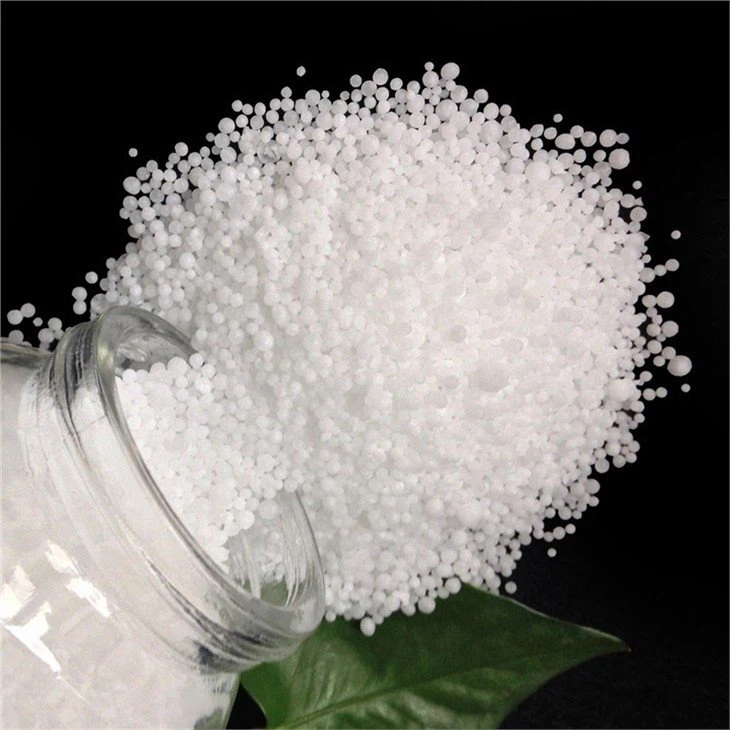
We offer magnesium nitrate in different forms to meet the diverse needs of our customers. There's Magnesium Nitrate Flake, which has a flaky texture and is often used in certain industrial applications where a specific form factor is required. Magnesium Nitrate Granular is another option. The granules are easy to handle and are popular in the agricultural sector as a fertilizer. And then there's Magnesium Nitrate Crystal, which has a high degree of purity and is suitable for applications where high - quality magnesium nitrate is needed.
Quality Control
Throughout the production process, quality control is of utmost importance. We test the magnesium nitrate at various stages to ensure that it meets the required standards. Parameters like purity, particle size (for granular and flake forms), and solubility are carefully measured. We use advanced analytical techniques such as titration, spectroscopy, and microscopy to analyze the samples.
Safety Considerations
Working with nitric acid and other chemicals in the production of magnesium nitrate can be dangerous. Safety protocols are strictly followed in our production facilities. Workers are provided with appropriate personal protective equipment (PPE) such as gloves, goggles, and protective clothing. The reactors and other equipment are designed with safety features like pressure relief valves and emergency shutdown systems.
Environmental Impact
We're also conscious of the environmental impact of our production process. The carbon dioxide released during the reaction when using magnesium carbonate is a greenhouse gas. We try to minimize this impact by optimizing the reaction conditions to reduce the amount of CO₂ emitted. Additionally, the waste products from the production process are treated properly to prevent pollution.

Why Choose Our Magnesium Nitrate?
As a supplier, we've built a reputation for providing high - quality magnesium nitrate. Our products are made using the latest production techniques and are subject to strict quality control. Whether you need magnesium nitrate for agriculture, industrial manufacturing, or any other application, we can offer you the right product in the right form.
If you're in the market for magnesium nitrate, I'd love to have a chat with you. We can discuss your specific needs, the quantity you require, and the best form of magnesium nitrate for your application. Don't hesitate to reach out for a procurement discussion.
References
- Cotton, F. A.; Wilkinson, G.; Murillo, C. A.; Bochmann, M. (1999). Advanced Inorganic Chemistry (6th ed.). Wiley.
- Housecroft, C. E.; Sharpe, A. G. (2004). Inorganic Chemistry (2nd ed.). Pearson Prentice Hall.