

As a supplier of Magnesium Nitrate Flake, I am often asked about the possible chemical reactions of this compound with various metals. Magnesium Nitrate Flake, with the chemical formula Mg(NO₃)₂, is a versatile inorganic compound that finds applications in diverse industries, including agriculture, pyrotechnics, and the production of other magnesium compounds. Understanding its reactions with metals is crucial for ensuring safe handling, storage, and utilization.
General Reactivity of Magnesium Nitrate Flake
Magnesium Nitrate Flake is an oxidizing agent due to the presence of nitrate ions (NO₃⁻). Oxidizing agents have the ability to accept electrons from other substances, causing them to be oxidized. When reacting with metals, Magnesium Nitrate Flake can potentially oxidize the metal, leading to the formation of metal nitrates and other products. The reactivity of Magnesium Nitrate Flake with metals depends on several factors, including the activity of the metal, the reaction conditions (such as temperature and pressure), and the presence of other substances.
Reactions with Active Metals
Active metals, such as alkali metals (e.g., sodium, potassium) and alkaline earth metals (e.g., calcium, magnesium), are highly reactive and readily lose electrons to form positive ions. When these metals come into contact with Magnesium Nitrate Flake, a redox reaction can occur.
For example, when sodium (Na) reacts with Magnesium Nitrate Flake, the following reaction can take place:
2Na + Mg(NO₃)₂ → 2NaNO₃ + Mg
In this reaction, sodium is oxidized from an oxidation state of 0 to +1, while magnesium is reduced from an oxidation state of +2 to 0. The products of the reaction are sodium nitrate (NaNO₃) and magnesium metal.
Similarly, calcium (Ca) can react with Magnesium Nitrate Flake as follows:
Ca + Mg(NO₃)₂ → Ca(NO₃)₂ + Mg
Calcium is oxidized to form calcium nitrate (Ca(NO₃)₂), and magnesium is reduced to its elemental form.
These reactions are typically exothermic, meaning they release heat. The heat generated can sometimes be sufficient to cause the reaction to proceed rapidly or even become explosive, especially if the reaction is not properly controlled. Therefore, it is essential to handle active metals and Magnesium Nitrate Flake with extreme caution and follow appropriate safety procedures.
Reactions with Less Active Metals
Less active metals, such as copper (Cu), iron (Fe), and zinc (Zn), are less likely to react spontaneously with Magnesium Nitrate Flake under normal conditions. However, in the presence of an acid or under elevated temperatures, these metals can react with Magnesium Nitrate Flake.
For instance, when copper reacts with Magnesium Nitrate Flake in the presence of an acid (e.g., hydrochloric acid, HCl), the following reaction can occur:
3Cu + 8H⁺ + 2NO₃⁻ → 3Cu²⁺ + 2NO + 4H₂O
In this reaction, copper is oxidized to form copper ions (Cu²⁺), while nitrate ions are reduced to form nitric oxide (NO). The overall reaction is a complex redox reaction that involves the participation of the acid and the nitrate ions.
Iron can also react with Magnesium Nitrate Flake under certain conditions. For example, in an acidic solution, iron can be oxidized by nitrate ions:
Fe + 4H⁺ + NO₃⁻ → Fe³⁺ + NO + 2H₂O
Here, iron is oxidized from an oxidation state of 0 to +3, and nitrate ions are reduced to nitric oxide.
Reactions with Noble Metals
Noble metals, such as gold (Au), silver (Ag), and platinum (Pt), are highly resistant to oxidation and do not readily react with Magnesium Nitrate Flake under normal conditions. These metals have a low tendency to lose electrons and are therefore relatively inert towards most oxidizing agents, including Magnesium Nitrate Flake.

However, in the presence of strong oxidizing agents or under extreme conditions (such as high temperatures and pressures), noble metals can be oxidized. For example, gold can be dissolved in a mixture of nitric acid and hydrochloric acid (known as aqua regia), which contains nitrate ions and chloride ions. The reaction is complex and involves the formation of various gold compounds.
Applications and Implications
The reactions of Magnesium Nitrate Flake with metals have several applications and implications in different industries.
In the agricultural industry, Magnesium Nitrate Flake is used as a fertilizer. When it comes into contact with metal components in agricultural equipment, such as pipes and tanks, it can potentially cause corrosion if the metal is reactive. Therefore, it is important to choose appropriate materials for storing and handling Magnesium Nitrate Flake to prevent corrosion and ensure the longevity of the equipment.
In the pyrotechnics industry, Magnesium Nitrate Flake is used as an oxidizing agent in fireworks and flares. The reactions of Magnesium Nitrate Flake with metals can contribute to the ignition and combustion processes, producing bright lights and colorful flames. However, the reactions need to be carefully controlled to ensure the safety of the pyrotechnic devices.
In the chemical industry, the reactions of Magnesium Nitrate Flake with metals can be used to synthesize other compounds. For example, the reaction of Magnesium Nitrate Flake with calcium can be used to produce calcium nitrate, which is used in the production of fertilizers, explosives, and other chemicals.
Conclusion
In conclusion, Magnesium Nitrate Flake can react with metals through redox reactions, depending on the activity of the metal and the reaction conditions. Active metals readily react with Magnesium Nitrate Flake to form metal nitrates and elemental metals, while less active metals require specific conditions (such as the presence of an acid) to react. Noble metals are generally resistant to oxidation by Magnesium Nitrate Flake.
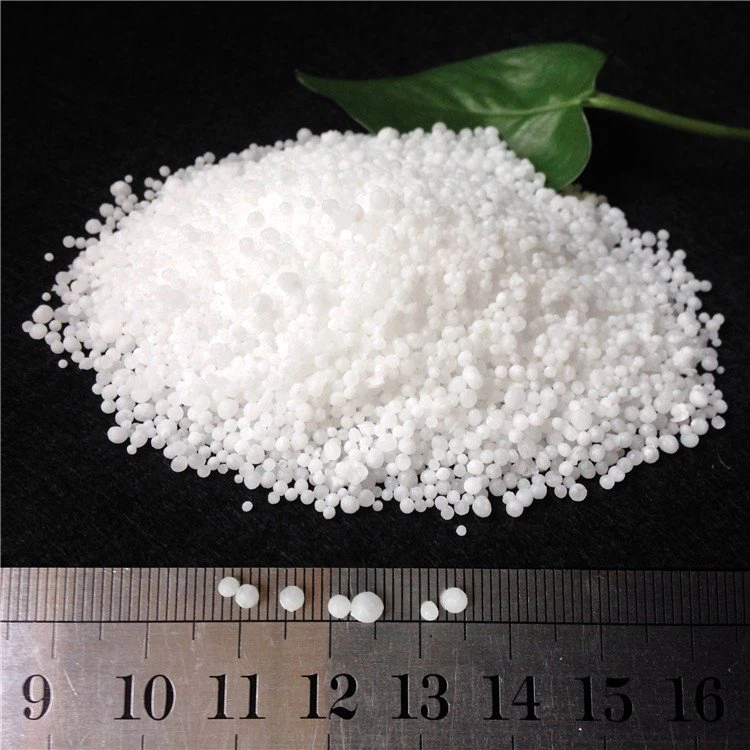
As a supplier of Magnesium Nitrate Flake, we understand the importance of providing high-quality products and ensuring the safety of our customers. We also offer other forms of magnesium nitrate, such as Magnesium Nitrate Granular and Magnesium Nitrate Crystal, to meet the diverse needs of our customers.
If you are interested in purchasing Magnesium Nitrate Flake or have any questions about its reactions with metals, please feel free to contact us for more information and to discuss your specific requirements. We look forward to working with you and providing you with the best solutions for your business.
References
- Housecroft, C. E., & Sharpe, A. G. (2012). Inorganic Chemistry (4th ed.). Pearson.
- Brown, T. L., LeMay, H. E., Bursten, B. E., Murphy, C. J., Woodward, P. M., Stoltzfus, M. W., & Lufaso, M. W. (2018). Chemistry: The Central Science (14th ed.). Pearson.
- Cotton, F. A., Wilkinson, G., Murillo, C. A., & Bochmann, M. (1999). Advanced Inorganic Chemistry (6th ed.). Wiley.